

A recent study published in Brain Circulation explored a fascinating question: Can correcting the cervical spine’s alignment improve blood flow to the brain? According to the authors, the answer appears to be yes.
What the Study Looked At
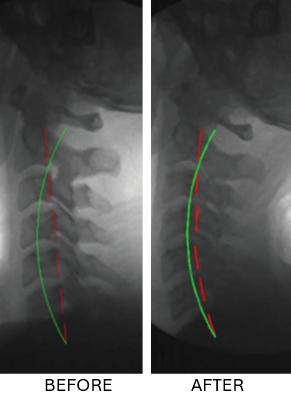
Researchers evaluated seven adults who all had a loss of cervical lordosis — meaning their neck curve was either straightened or reversed. Previous research has shown that poor cervical alignment can affect vertebral artery hemodynamics, but this study went a step further by measuring actual changes in cerebral blood flow using magnetic resonance angiography (MRA).
How They Measured Blood Flow
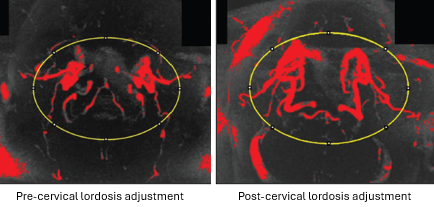
Each patient received a brain MRA before and after a cervical lordosis correction using the Cervical Denneroll™ orthotic. The researchers analyzed pixel intensity in the cerebral arteries — a validated way to estimate blood flow volume.
The Results Were Striking
Across all seven patients, cerebral blood flow increased significantly after the neck curve was corrected. The improvements ranged from 23% to 225%, and the statistical analysis confirmed the changes were highly significant.
The study also found a relationship between how far a patient’s neck curve deviated from normal and how much blood flow improved — suggesting that the worse the curve, the more potential benefit from correction.
Why This Matters
The cervical spine houses the vertebral arteries, which supply blood to the brain. When the neck curve is lost, these arteries may experience abnormal tension or compression. Improving cervical alignment may help restore more natural blood flow patterns.
While this study is small, it adds to growing evidence that spinal structure can influence neurological and vascular function, not just pain and posture.
Takeaway for Patients
If you struggle with neck pain, stiffness, headaches, dizziness, or posture issues, your cervical alignment may be playing a role. A structural evaluation can help determine whether loss of cervical lordosis is contributing to your symptoms — and whether corrective care may help.